

International
US-Iran deal poses new opportunities, economic challenges for S. Korea
indianews.com.au
•19 June 2026, 4:00 AM
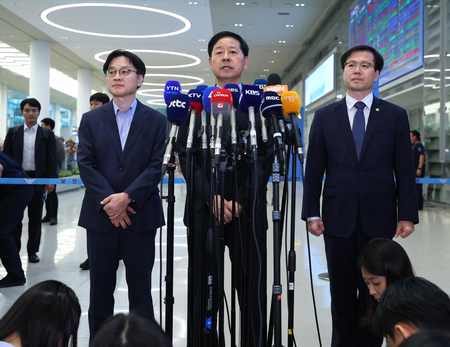

Seoul, June 19 (IANS) The recent memorandum of understanding (MOU) between Washington and Tehran aimed at ending their conflict presents both opportunities and challenges for South Korea, the finance minister said on Friday, noting the government will implement post-conflict economic policies. Finance Minister Koo Yun-cheol made the remark during a ministerial meeting on international economic affairs, saying the government will seek to create long-term opportunities while strengthening its economic security and enhancing supply chain resilience, reports Yonhap news agency. “We will aim to secure areas of cooperation with Middle Eastern nations on reconstruction and improving their fiscal health,” the finance minister said. “We will address risks in the global supply chain highlighted by the recent conflict.” Touching on Washington’s proposed tariffs on dozens of countries, including Asia’s fourth-largest economy, over their alleged failure to enforce import bans on products made with forced labor, Koo said Seoul will make proactive efforts to seek a balance that serves the interests of both countries. The Office of the U.S. Trade Representative (USTR) recently proposed imposing tariffs of 10 percent or 12.5 percent on products from 60 trading partners over their alleged failure to enforce import bans on products made with forced labor. “By thoroughly addressing overall trade-related agendas with the U.S., we will make efforts to ensure South Korean companies are not placed at a disadvantage,” Koo added.
In a separate meeting on economy-related affairs, Koo noted external uncertainties appear to be easing following the U.S.-Iran MOU, though the fallout is still affecting the South Korean economy. “The government will closely monitor developments in the Middle East and support the safe and prompt passage of South Korean ships through the Strait of Hormuz,” Koo said in his opening statement. “As the impact of the Middle East conflict, including slowing employment, consumer price hikes and volatility in the foreign exchange market and key rates, continues to linger, the government will spare no effort to ease the burden on people’s livelihoods.”
