

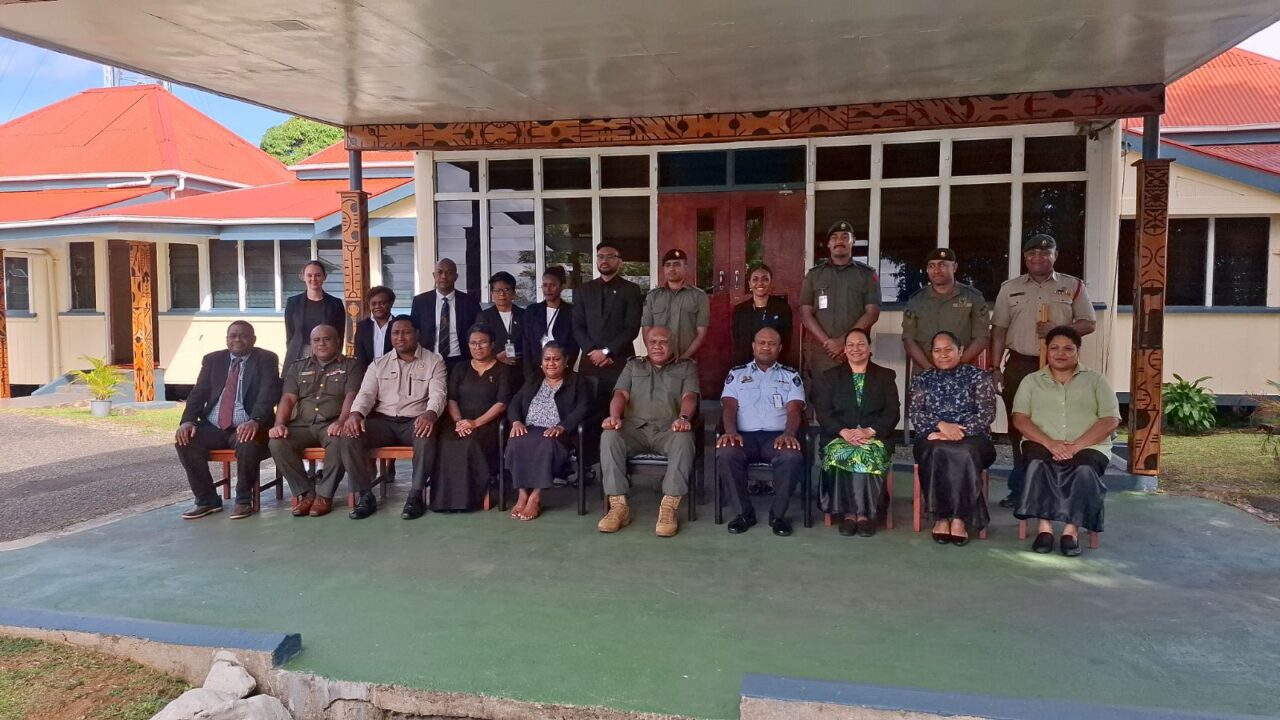

The Republic of Fiji Military Forces will put its operational readiness and inter-agency crisis response capabilities to the test during Exercise Bougainville 2026, involving about 660 personnel from seven agencies. Exercise Bougainville 2026 Lead Planner Captain Seci Nawalowalo says the exercise design has been finalised following a deliberate six-month planning process that began in February and included tabletop, command post and planning exercises. He says the exercise is designed to validate the RFMF’s readiness to support a joint national crisis response under a multi-agency coordination framework while also allowing participating agencies to assess and strengthen their coordination mechanisms. The exercise will run from August 7 to 28, with the main operational phase from August 9 to 25.
The exercise will begin with a humanitarian assistance and disaster relief response to a simulated tropical cyclone before escalating to civil unrest, insurgency, terrorism and maritime incursion scenarios. Captain Nawalowalo says the scenarios are based on lessons learnt during earlier planning exercises, making the exercise a tested process rather than a theoretical one. He says outcomes from the exercise will feed directly into future capability reviews, military doctrine and national response systems. Captain Nawalowalo also revealed that fuel shortages remain the biggest operational risk, with only 50 percent of the required fuel budget currently available.
He says contingency measures have been introduced, with the first phases of the exercise to be conducted as tabletop and command post exercises to reduce logistical demands while ensuring the exercise remains on track. Acting Permanent Secretary for Rural and Maritime Development and Disaster Risk Management, Mitieli Cama says the exercise will help identify weaknesses in coordination between government agencies and improve Fiji’s disaster response systems. Cama says the exercise is also expected to build capacity across key agencies, including the Disaster Risk Management Office, the Ministry of Health, the Ministry of Tourism, the Fiji Police Force and the National Fire Authority. He says introducing new threat scenarios during the exercise is critical to ensuring agencies are prepared before real emergencies occur, rather than reacting after a crisis unfolds.
